Simple meal planning means deciding on a few useful meals, buying ingredients that overlap, and leaving room for your week to change. Plan around the occasions when you expect to cook, rather than filling every calendar square. A flexible plan gives food a purpose without turning dinner into another rigid obligation.
The example below is an organizational guide, not a nutrition plan. Cooking combinations are AI-assisted and have not been kitchen-tested by this publication. Adapt portions, ingredients, and preparation to your household, and use appropriate guidance for cooking and storing individual foods.
Start with the week, then look at the food
Mark the evenings when you will realistically have time and equipment to cook. Identify meals away from home, late arrivals, and uncertain plans. You may need three cooking ideas and two fallbacks rather than seven separate recipes. Make the plan reflect your actual schedule, including the days when cooking is unlikely.
Next, check the refrigerator, freezer, and pantry. Look at what is safe to use and what you already enjoy. An open ingredient deserves attention, but its presence does not oblige you to eat it if storage or handling is uncertain. Planning should prevent waste through better decisions, not pressure you to rescue questionable food.
Choose ingredients with more than one job
Ingredient overlap works best when it creates genuinely different meals. Chickpeas can become a sandwich filling or join a bowl. Cabbage can supply crunch in both, while carrots can be used raw or cooked. A lemon can season a dressing and finish a soup. The same ingredients do not need to produce the same flavor every night.
Buy variety where you notice it most. Two different sauces may make a repeated grain feel more interesting than buying three grains that require separate preparation. Fresh herbs can be useful, but choose a bunch you have several plans for. If only a small amount is needed, consider another seasoning you already own.
Keep the number of perishable ingredients manageable. A plan containing many half-used packages can create more work than it saves. Check package sizes against the portions you expect to make, and choose frozen or shelf-stable alternatives when they better fit your schedule.
An example week with room to move
| Meal occasion | Example meal | Shared ingredient | Flexible adjustment |
|---|---|---|---|
| First cooking evening | Rice, chickpeas, cooked carrots, lemon dressing | Chickpeas and carrots | Use another grain already available |
| Assembly lunch | Mashed chickpea sandwich with cabbage | Chickpeas and cabbage | Serve with crackers instead of bread |
| Second cooking evening | White bean and tomato soup | Carrots or herbs if suitable | Change the vegetables to what you have |
| Later flexible meal | A safely stored or frozen prepared portion | A previous component | Use the fallback if storage limits require it |
| Low-effort backup | Pasta with pantry tomato sauce and beans | Beans and tomatoes | Choose another familiar quick meal |
This table deliberately avoids promising that an early-week cooked component will remain suitable late in the week. Make that decision from ingredient-specific storage guidance, actual handling, and your schedule. Freeze appropriate portions when suitable, or cook smaller quantities. The calendar does not override food safety.
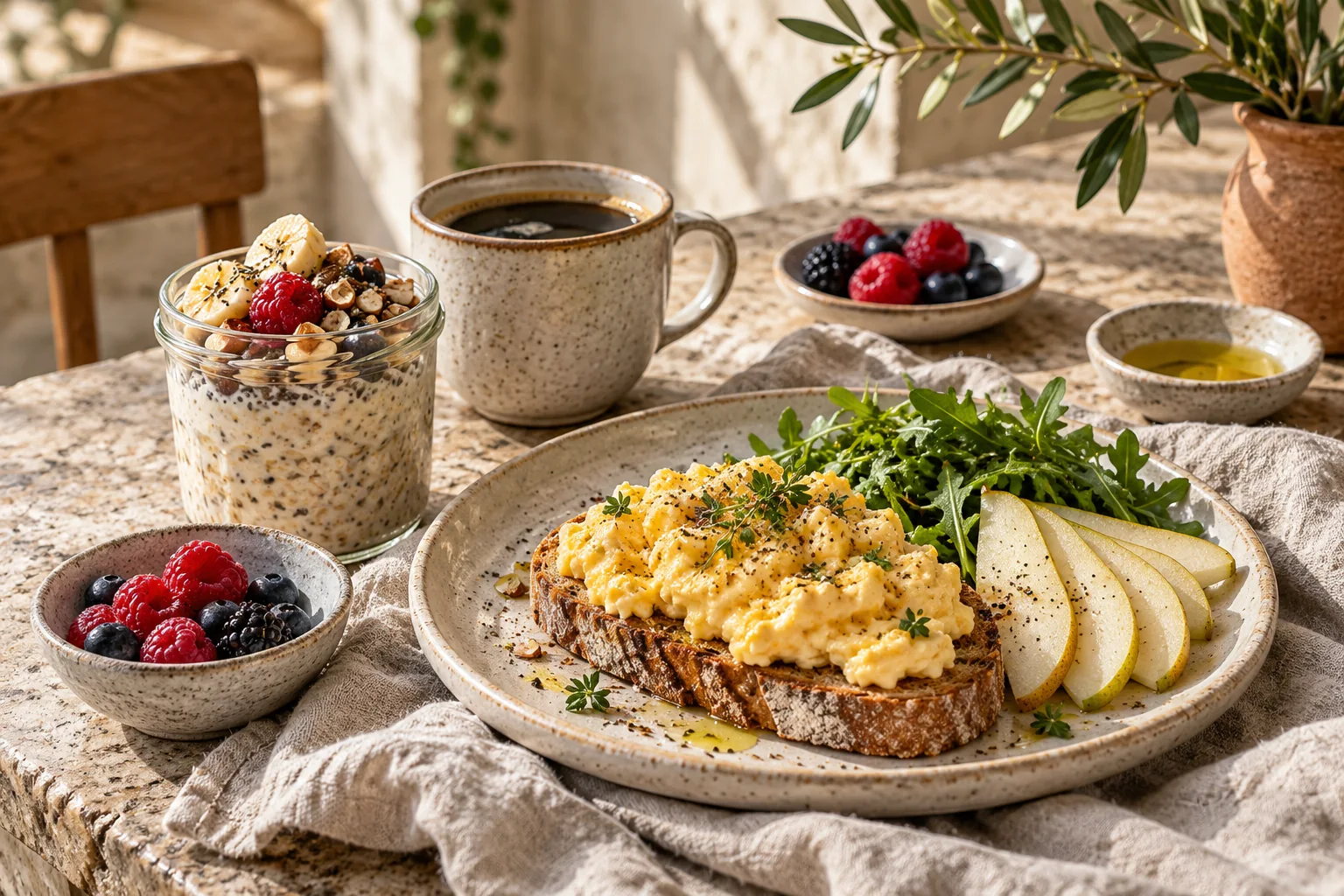
Breakfast can stay simpler than dinner. Use one or two familiar bases with different toppings, as in our breakfast planning ideas. Lunch may share ingredients with dinner without being a duplicate plate. Our plant-based lunch guide shows how sandwiches, salads, and soups use similar staples.
Write a shopping list with decisions built in
Group the list by how you shop: produce, pantry items, chilled foods, and frozen foods, for example. Note quantities where the meal depends on them. “Carrots for two meals” is more useful than buying a large bag with no plan. Check what you have before adding another bottle of dressing or unopened packet of grain.
Add a substitution beside ingredients that are likely to be unavailable or expensive. Cabbage could replace cucumber when crunch is the goal; another bean might work in a soup. Some substitutions change cooking methods or allergen suitability, so keep their role in mind rather than assuming all ingredients are interchangeable.
Leave space for a food you simply enjoy. A practical plan does not need to justify every item through efficiency. Equally, a special ingredient should have a clear use if it is likely to sit forgotten after one recipe.
Prepare components selectively
Choose preparation that removes a real obstacle: washing suitable produce, making a dressing, or cooking a component you will use safely. Do not automatically chop everything on the shopping day. Some ingredients hold their texture better whole, and a large preparation session may be unrealistic for your household.
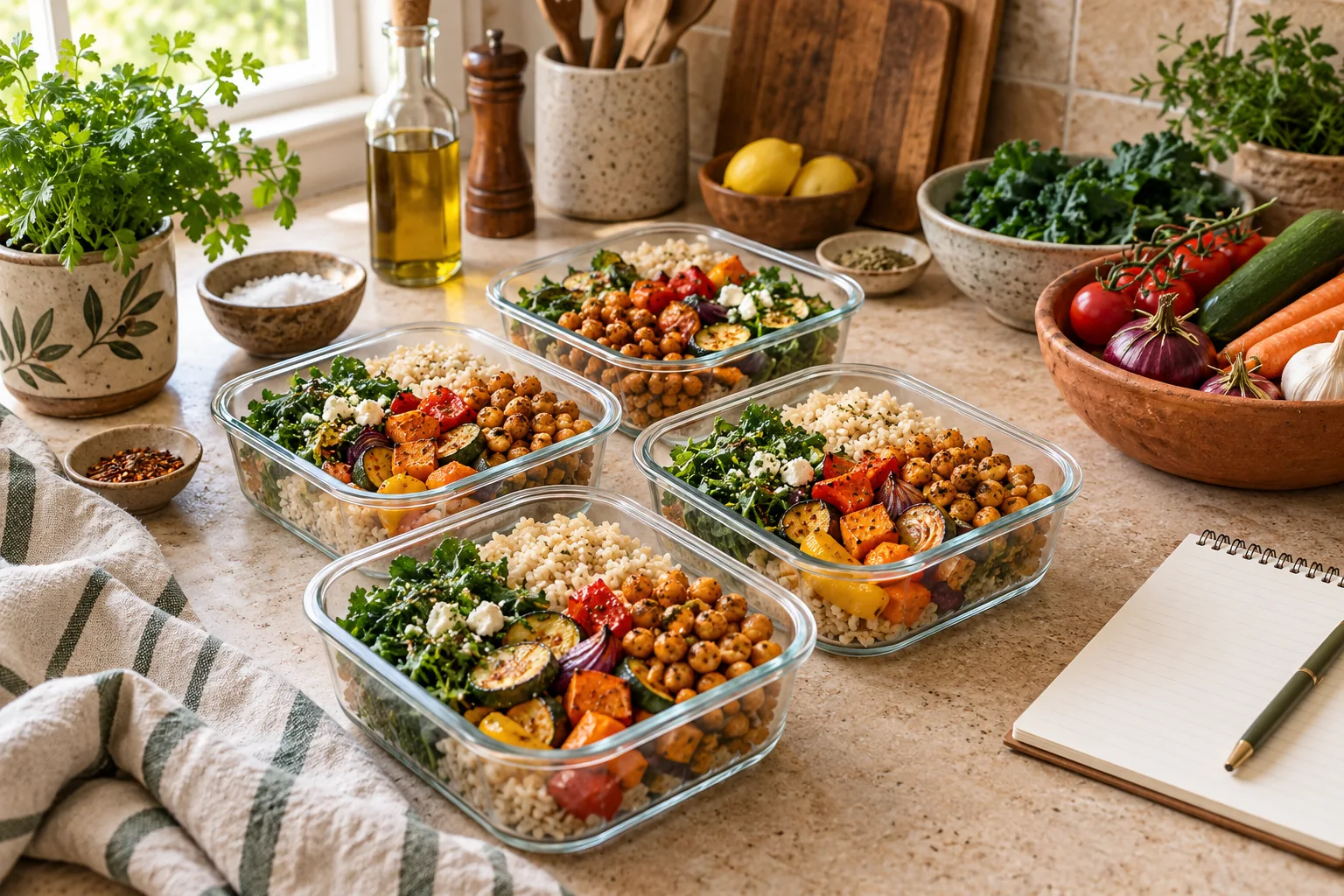
Label prepared food clearly. Keep track of what it is and when it was made. Use containers that let you see or identify their contents, and place food where it will not be forgotten. Organization helps you act on storage guidance; it is not a substitute for it.
Consult the FoodSafety.gov cold food storage chart for the foods you are using, together with relevant package instructions. Different components have different requirements. If you need detailed cooling, thawing, or reheating directions, consult appropriate official guidance for that process rather than guessing from appearance.
Give leftovers a named destination
A container is easier to use when you know what it is for. Labeling a portion “lunch component” can help, but also identify the food and preparation date. Decide whether you will eat it in a suitable timeframe, freeze it where appropriate, or avoid making that extra portion in the first place.
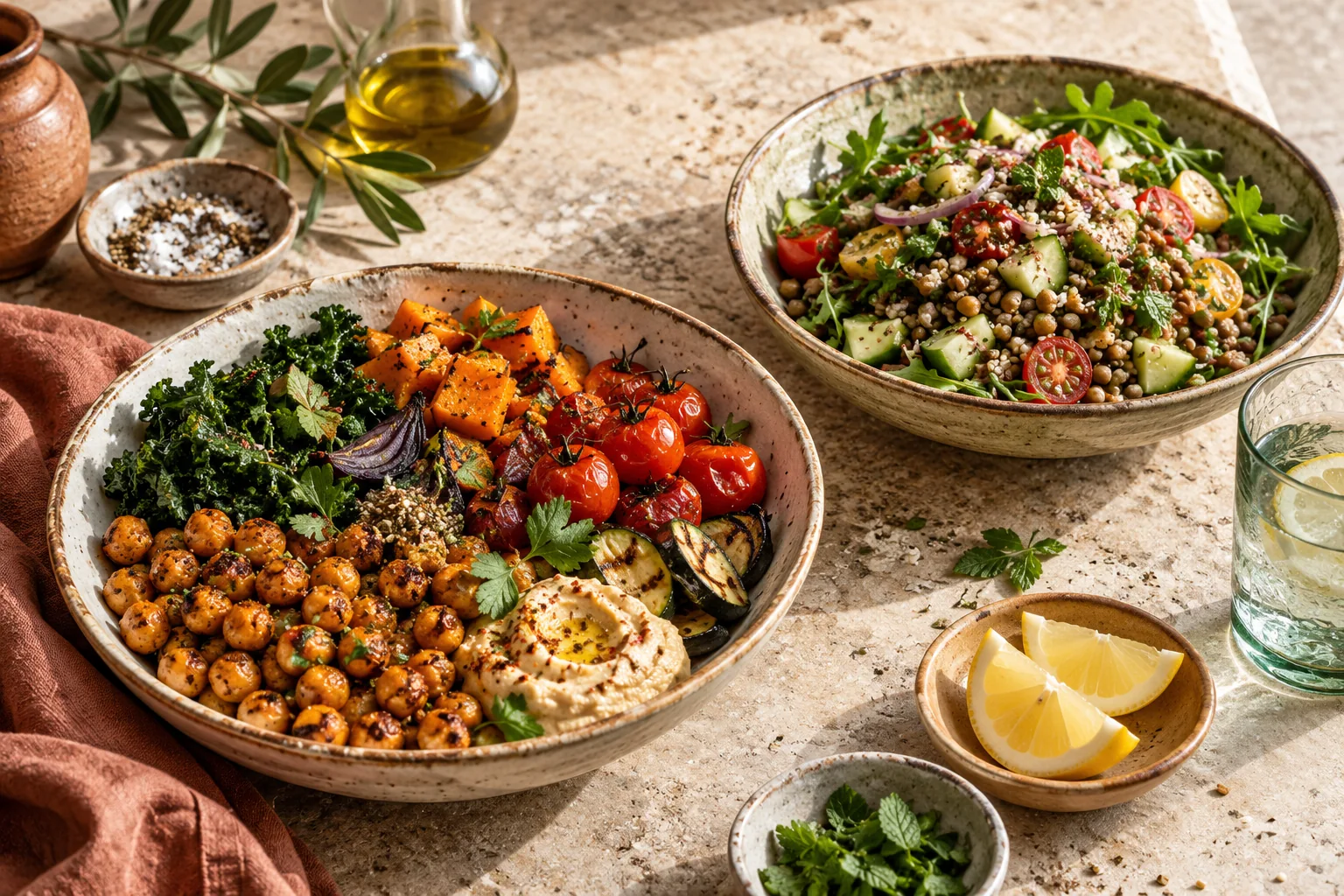
Change the format when you want variety. Cooked vegetables might join a grain bowl; beans might become a spread. Add a fresh element at serving when suitable. Our balanced bowl guide explains how sauce and texture can connect components that were prepared separately.
Build in a change-of-plan rule
When an evening becomes busy, move the meal rather than trying to force it into the schedule. Reassess the ingredients that cannot wait, using their actual storage requirements. A fallback meal should be something you can prepare with the time and energy available, not a second ambitious recipe.
After the week, notice what went unused and why. Perhaps the plan included too many cooked lunches, or a vegetable required more preparation than expected. Adjust the next shopping list. Useful planning is a repeated conversation with your household's habits, not a test you pass by following every original decision.
Meal planning questions
How many meals should I plan?
Start with the number you expect to cook. For many schedules, a few anchors and a fallback are easier to use than a fully assigned week.
What if different people want different meals?
Share a base where practical and offer separate toppings or sides. Account for dietary requirements and shared preparation concerns instead of assuming one assembled dish fits everybody.
Does meal planning require a large batch-cooking session?
No. Choosing meals and shopping quantities is already planning. Prepare only what helps and what you can store and use appropriately.
Begin with the next few meals, one overlapping ingredient, and one dependable backup. Expand the plan only when the extra detail makes your week easier.