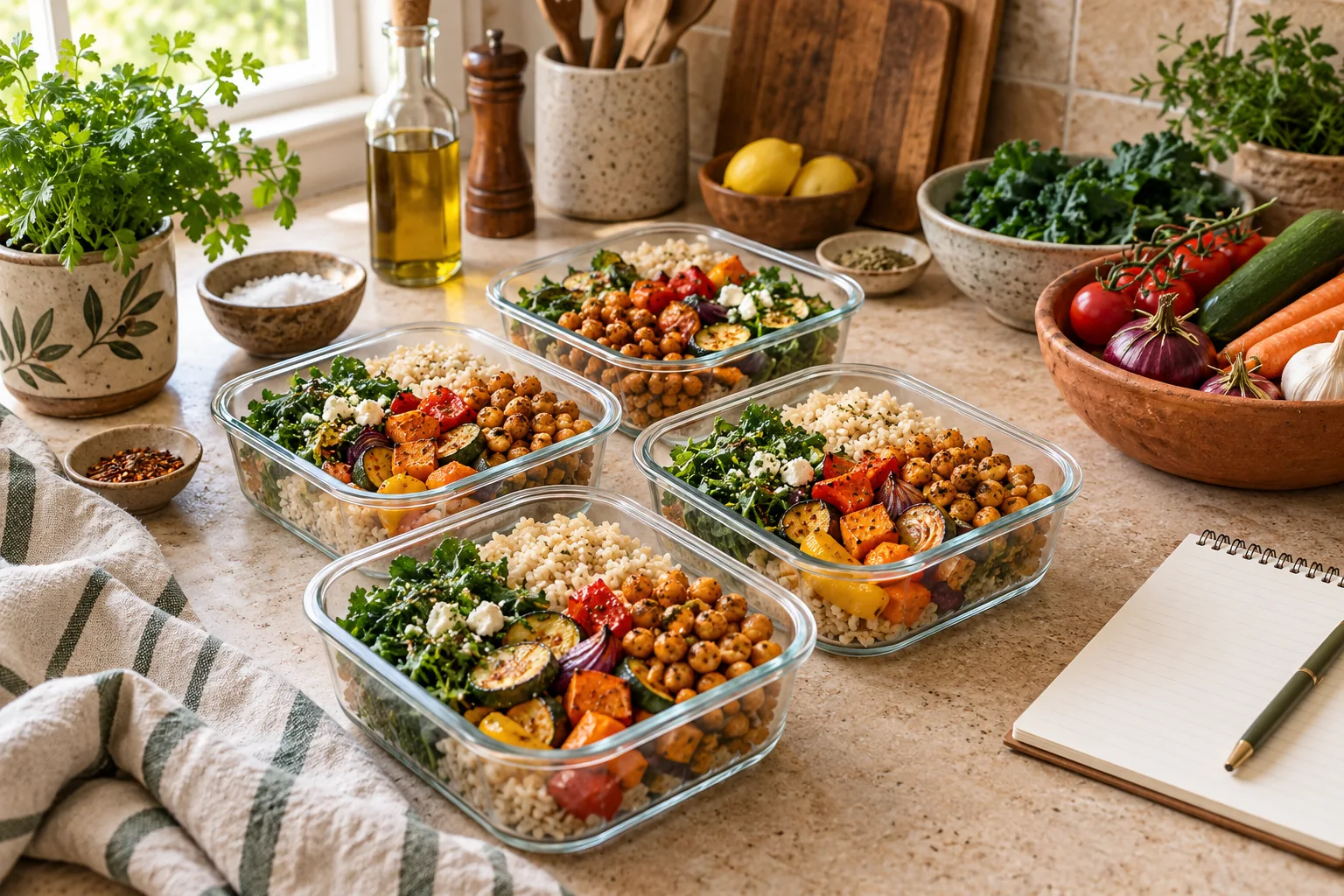
A manageable morning kitchen routine removes a few avoidable decisions and keeps the things you use within easy reach. Begin with one clear preparation space, one familiar breakfast, and a simple order of tasks. The aim is a kitchen that supports the morning you have, including the rushed ones.
A calm-looking kitchen in a photograph may have little in common with a kitchen shared by children, housemates, or someone leaving for an early shift. A useful routine allows for interruptions. It does not require a spotless room, matching containers, or a particular waking time, and it is not a treatment for stress or any health condition.
A routine earns its place when it makes the next useful action easier.
Notice the recurring sticking point
Before reorganizing cupboards, identify what regularly slows you down. Is the clean mug difficult to find? Does everyone need the same bit of counter? Are packed lunches being assembled while breakfast ingredients cover the worktop? Choose one concrete problem. A small change aimed at a real obstacle is more useful than a complete overhaul based on an idealized morning.
Watch the sequence rather than judging it. You might discover that the kettle is convenient but the tea is across the room, or that lunch containers are stored without their lids. These are storage and workflow problems. Solving them can reduce unnecessary movement without asking anyone to become a different kind of morning person.
An evening reset with a clear stopping point
Prepare only what will make tomorrow easier. Wash the equipment you expect to need, clear a small food-preparation area, and identify the breakfast ingredients. Put refrigerated food away appropriately instead of leaving it on display. If a lunch needs taking along, decide where its components will be and what will keep them suitably chilled.
The stopping point matters. A reset that expands into cleaning every cupboard is unlikely to last. Think in terms of readiness: a clean bowl, a usable surface, and ingredients you can locate. A few dishes elsewhere do not prevent those three conditions from being met.
Arrange the kitchen around tasks
A beverage area can hold mugs and the drinks you actually use. A breakfast area might group oats, bread, and suitable shelf-stable toppings. Keep a clean utensil nearby if that is practical. Store foods according to their requirements, not merely according to the visual appeal of the arrangement.
For packed meals, put compatible containers and lids together. Check that the containers fit the bag you carry. If several people pack food, give each person an identifiable space or basket. Labels can be useful when they answer a question, but there is no need to label a cupboard whose contents are already obvious.
Keep frequently used objects reachable for the people who need them, while placing sharp tools and other hazards appropriately. A shared household should not depend on one person's memory of where everything lives. Simple, agreed locations make the routine easier to explain and maintain.
Choose two breakfast defaults
Pick one breakfast for mornings with cooking time and one for mornings without it. These are fallbacks, not rules. A warm oat bowl might suit one household; toast and fruit might suit another. The best default is made from ingredients you regularly have and genuinely want to eat.
Keep variation small. Change fruit, a spread, or a savory topping rather than replacing the entire breakfast. Our mindful breakfast ideas include combinations that share ingredients while offering different textures. Those cooking examples are AI-assisted and untested, so adapt them to your own equipment and preferences.
If people want different breakfasts, look for a shared preparation step: toast several slices of bread, put out clean bowls, or offer toppings separately. Shared preparation does not require matching appetites. Avoid turning the first meal of the day into a discussion about what everyone ought to enjoy.
A sample routine that can bend
| Moment | Useful action | When the morning changes |
|---|---|---|
| Enter the kitchen | Clear the small preparation area | Move only what blocks the task |
| Choose breakfast | Use the cooking or assembly default | Select the simplest available option |
| Prepare food | Keep needed tools nearby | Skip optional toppings and extra dishes |
| Pack to leave | Check food, container, and cooling plan | Change lunch arrangements if needed |
| Finish | Return perishables and leave a usable surface | Prioritize safe storage over tidiness |
The sequence is intentionally untimed. A fixed minute-by-minute schedule can become another demand when someone spills a drink or the day starts late. Use the order as a reference, then allow the pace to change. If an action does not help your household, remove it.
Make shared routines explicit
People often disagree about a kitchen because their expectations are invisible. One person considers a clear sink ready for morning; another needs a clean pan and an empty section of counter. Agree on the minimum conditions that matter. A short, specific arrangement is easier to follow than “leave everything nice.”
Divide tasks by what is realistic. Someone leaving first might put away clean dishes; someone staying later might handle breakfast cleanup. For children, an age-appropriate task could be choosing a bowl or returning a spoon. Adapt responsibilities to ability and household circumstances, without turning a practical routine into a measure of character.
Avoid adding new friction
Decanting every ingredient into matching jars can create extra washing and remove useful package information. Buying elaborate organizers before measuring a shelf can waste space. An attractive arrangement may be inconvenient if everyday objects are hidden behind decorative ones. Test a simple rearrangement before investing in a system.
Keep the routine visible only if reminders help. A small note with three actions may be useful; a long checklist can become background noise. If a step is skipped repeatedly, ask whether it belongs at a different time or whether it is needed at all.
Food preparation also has safety requirements that visual organization cannot replace. For prepared ingredients, use appropriate storage guidance such as the FoodSafety.gov cold food storage chart. Keep labels and dates where they can actually inform your choices.
Review the routine after ordinary mornings
Ask which change saved effort, which object still went missing, and which task could happen later. Keep the useful part and discard the rest. A routine should evolve with work hours, seasons, and the people using the kitchen. What works during a quiet week may need simplifying when schedules become crowded.
Morning routine questions
What if I have no time for an evening reset?
Choose one action, such as washing the bowl you will need. A very small preparation habit is easier to repeat than an ambitious routine that depends on a free evening.
Does the kitchen need to be clean before breakfast?
You need suitable clean equipment and a safe preparation surface. A full-room cleaning session is a separate task. Prioritize the area and utensils that will touch food.
How do I connect mornings with weekly food planning?
Keep breakfast ingredients on the same practical shopping list as other meals. The simple meal planning guide explains how to reuse ingredients without scheduling every meal rigidly.
For tomorrow, change just one thing that caused trouble today. A predictable place for a mug or a breakfast decision made in advance is a perfectly useful beginning.